3D Printed Soft Bait Molds: Pouring Your Own Soft Plastics
3D printed soft bait molds explained: how two-part PETG molds work, plastisol pouring basics, required safety steps, and an honest look at mold lifespan.
Auf Deutsch: Angelköder selber machen — inklusive Guss mit Form
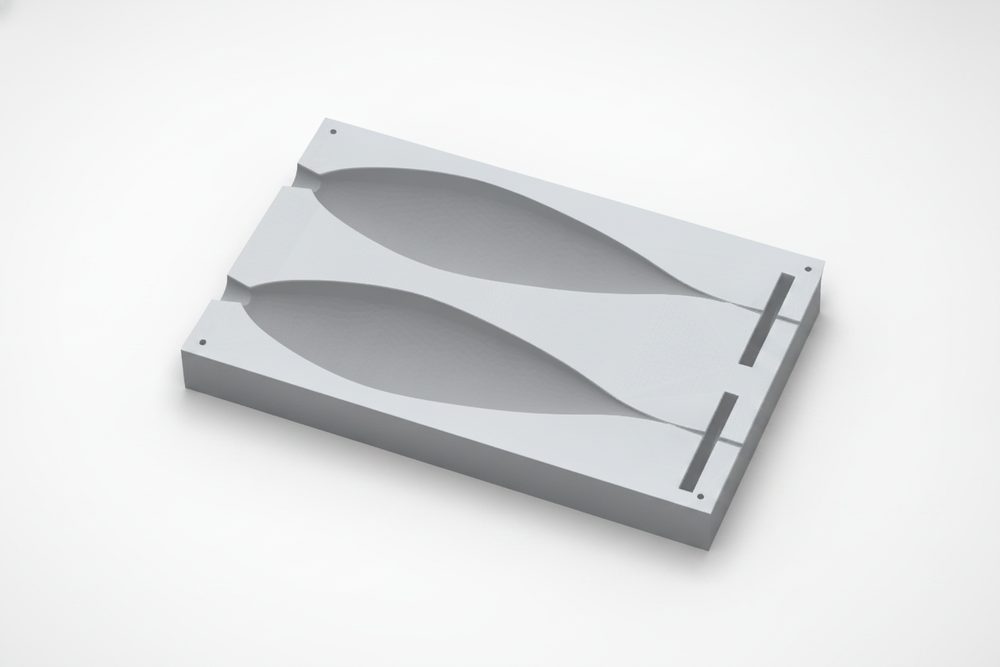
A soft-bait mold is a printed two-part cavity you clamp shut and fill with hot liquid plastic. Once it cools, you open the mold and pull out a soft-plastic bait shaped exactly like the cavity. It is a well-established hobby process — printed molds simply replace the aluminum or resin molds anglers used to buy or cast themselves. This guide covers how the molds work, how to pour safely, and what to actually expect from the results.
How a two-part printed mold works
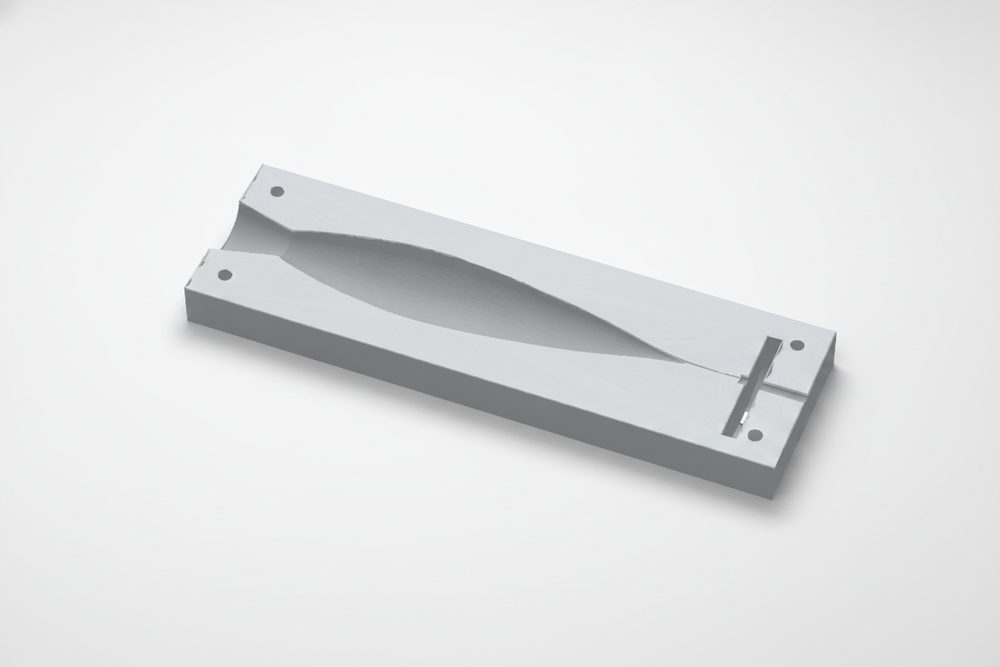
Most soft-bait shapes are symmetric down the middle, so a mold package ships as a single plate file that you print twice — both halves are identical, which is simpler than modeling two mirrored parts and keeps the file smaller. A design like the Shad Paddle Mold 10 ships exactly this way: one plate, printed twice. Once both plates are printed, you pin them together with alignment dowels: cut four short lengths (about 8 mm) from 1.75 mm filament and press them into the corner holes of one plate. The other plate's holes line up over the dowels, so the cavity halves seat the same way every time.
The sprue is the funnel-shaped opening at the top where you pour — clamp the two halves together with rubber bands or small spring clamps, funnel side up, before you heat anything. A thin vent channel runs from the cavity to an opening near the tail. That vent is the visual cue for a full pour: when plastisol rises and appears in the vent hole, the cavity is full and it is time to stop pouring.
Plastisol basics
Plastisol is a liquid PVC compound that stays pourable when hot and cures solid as it cools — no chemical mixing or curing agent involved, just heat. It is sold pre-colored or clear, and glitter or dye can be stirred in before pouring. Manufacturers specify a pour temperature; most plastisol used for soft baits pours at around 170 °C (340 °F), hot enough to flow into fine detail but well past a safe handling temperature for skin or a PLA mold.
Heat it slowly and stir often — short bursts in a microwave, or a dedicated pot on low heat, both work. Never leave heating plastisol unattended, and never rush it with high heat; overheated plastisol can scorch, discolor, and release irritating fumes.
Safety — required reading before your first pour
This is not optional. Plastisol at pour temperature causes severe burns instantly and keeps flowing while it burns, so a few rules apply every time, without exception:
- Never let water touch hot plastisol. Even a single drop — a wet mold, a wet spoon, condensation — flash-boils instantly and can eject hot plastic explosively. Molds, tools, and your workspace need to be completely dry before you start.
- Work with ventilation. Heat plastisol outdoors or under an extractor. If it starts to smoke, it is too hot — stop, let it cool, and start over rather than pushing through.
- Wear heat-resistant gloves and eye protection, plus long sleeves and closed shoes. Keep children and pets out of the work area entirely.
- Have a dry, heat-proof surface ready before you lift the hot container off the heat source.
None of this is unique to printed molds — it is the same discipline anyone pouring plastisol needs, printed mold or store-bought. The mold material does not change the risk of the plastic itself.
Pouring, step by step
With the safety basics covered, the pour itself is a short sequence:
- Clamp the two mold halves together, sprue funnel facing up.
- Heat plastisol per the manufacturer's instructions until it is fully clear and fluid, stirring in color or glitter as needed.
- Pour in a thin, steady stream into the funnel until plastisol rises and appears in the vent hole at the tail — that is your signal the cavity is full.
- Wait 10–15 minutes until the plate is hand-warm, then open it, flex the plate slightly, and peel the bait out. Trim the sprue and vent flash with scissors.
- Let the bait rest for a day before fishing it — it firms up further after demolding.
How long does a printed mold actually last
Here is the honest part: a PETG-printed mold is good for dozens of pours, not industrial production. Repeated heat cycles slowly degrade the cavity surface. You will notice it start to happen — a cavity that goes matte, detail that rounds off, baits that start sticking instead of releasing cleanly. When that shows up, print a fresh plate; the file is yours to reprint as many times as you need.
Two habits stretch a mold's working life. Let the plate cool between pours — pouring back-to-back without a cooldown overheats the PETG and can warp the plate permanently. If you want to pour continuously, keep two plates in rotation: pour one, let it sit while the second cools from its last pour, and swap.
First pours won't be perfect
Short pours, trapped air pockets, and visible surface lines are normal on your first few attempts, not a sign anything is wrong with the mold. Plastisol that is a little hotter — never smoking — flows further into fine detail; pouring more slowly traps less air on the way in. A light coat of mold release or worm oil in the cavity before pouring also helps the bait let go cleanly when you demold it. Expect the first handful of pours to be a dry run for your technique, not your final product.
Leftovers and disposal
Failed pours are not wasted — plastisol is remeltable. Cut up a bad bait and add it back into your next batch of the same color. What you should not do is pour leftover plastisol down a drain; let it cure solid in a disposable container and bin it once it has cooled and set.
If you are weighing which material to print in at all, the PETG vs PLA guide covers why PETG is the only material that survives this process. And if you would rather start pouring than start modeling, the Fishing3D shop has ready-made designs like the Finesse Pin Mold 7 to start from.
 PETG filament 1.75 mmThe material we design for — tough, water-safe, easy to print.
 Spring clampsHold the mold halves closed while pouring.
Frequently asked
Do I need a special mold press or machine to pour soft baits?
No — hand-clamping the two mold halves with rubber bands or small spring clamps is enough. The vent hole tells you when the cavity is full, so you don't need pressure injection equipment.
Is pouring plastisol at home dangerous?
Handled carelessly, yes — plastisol pours at around 170 °C, causes severe burns instantly, and reacts violently if water touches it. Handled with the required safety steps — dry tools and workspace, ventilation, heat-resistant gloves, eye protection — it's manageable, but every pour deserves full attention. This is not casual crafting.
How many baits can I pour from one mold before it wears out?
Dozens of pours per plate, not hundreds — a printed mold is a hobbyist tool, not industrial tooling. Watch for a matte cavity, rounded detail, or baits sticking; that's your signal to print a fresh plate.
My first pour had air bubbles and didn't fill the tail — what went wrong?
Probably nothing wrong with the mold. Short pours and air pockets are common while you dial in temperature and pour speed. Try slightly hotter (never smoking) plastisol and a slower, steadier pour.
Can I reuse a bait that came out wrong?
Yes — cut it up and remelt it into your next batch of the same color. Just don't pour leftover plastisol down a drain; let it cure and dispose of it solid.
Every Fishing3D file ships with the guides that match it — print profiles, assembly, sealing, tuning. Ordering opens soon — leave your email for a single heads-up.