3D Printed Rod Holders: Bank Heads & Bankstick Adapters
How a 3D printed rod holder actually fits: the 3/8" BSF thread, three head shapes, bankstick adapters, PETG printing settings, and honest limits.
Auf Deutsch: Rutenhalter aus dem 3D-Drucker — was hält, was nicht
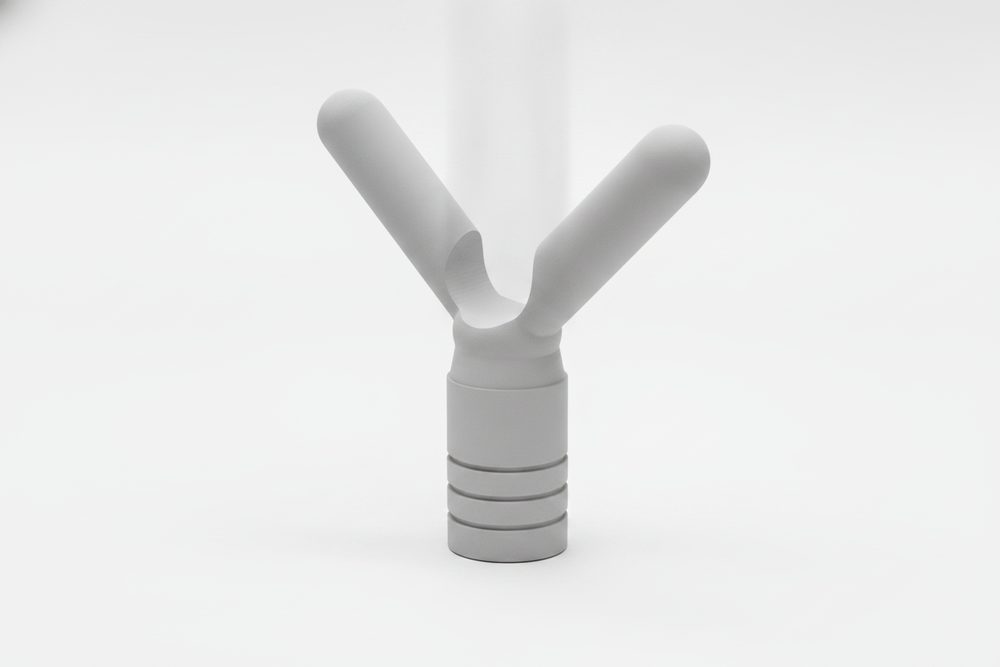
A 3D printed rod holder is not a novelty — it's a normal bank-fishing rod rest, made the way any rest is made, with the print step standing in for a mould or a lathe cut. Every Fishing3D bank head and bankstick adapter screws onto the same 3/8" BSF thread already standard on bank sticks, storm poles and rod-pod tops worldwide, so a printed head sits exactly where a bought one would. This guide covers how that thread fits, which head shape suits which situation, and what a printed rest is — and is not.
Why a printed bank head
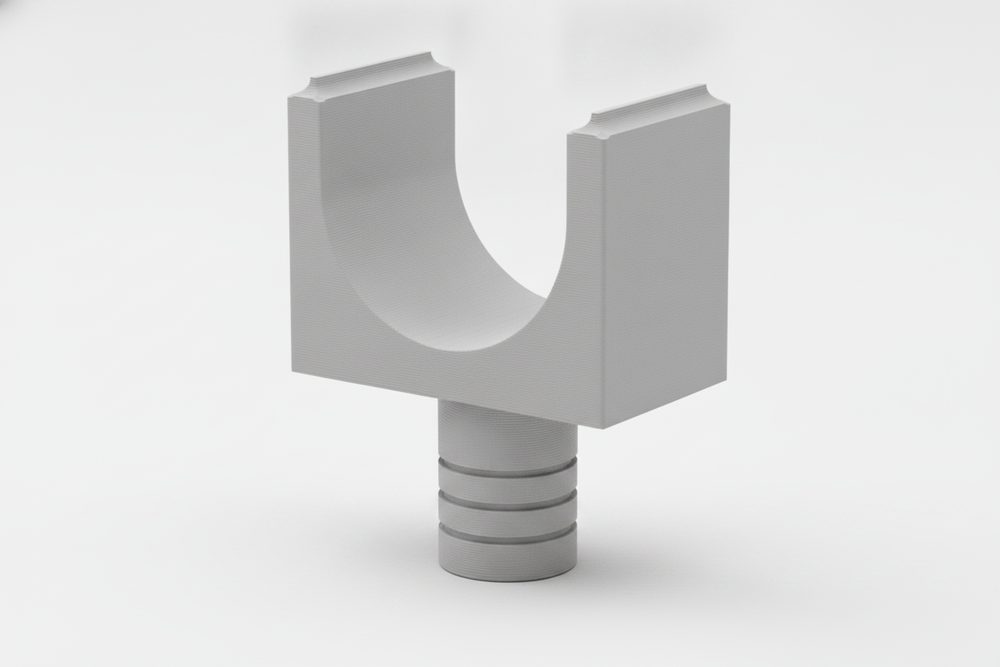
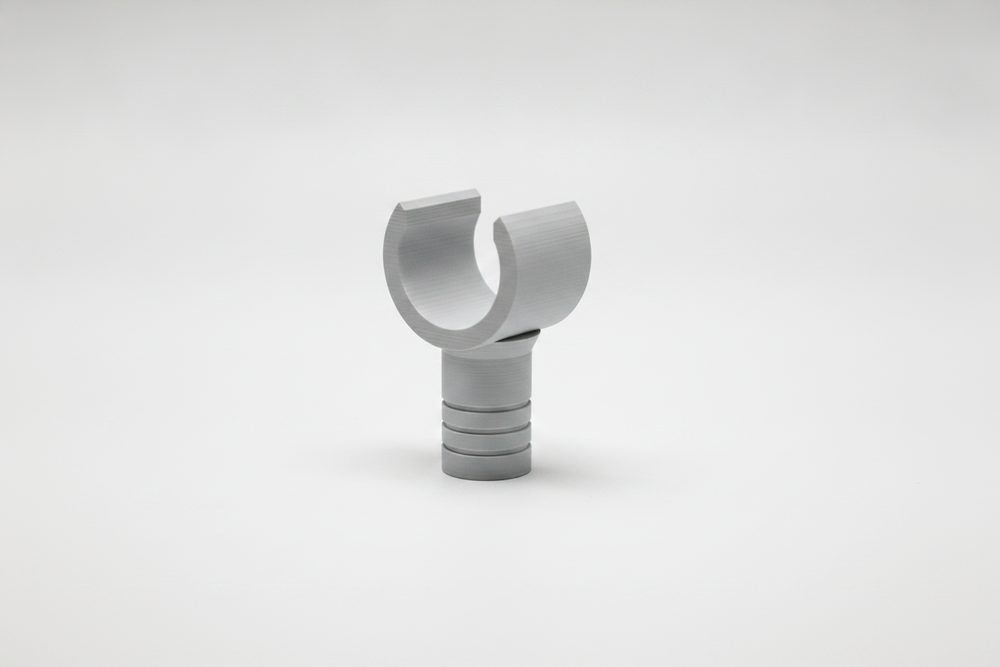
Printing a rod holder is simple: you print exactly the shape you need, in the material you choose, and a replacement costs a few grams of filament instead of a tackle-shop trip. Three head shapes cover most bank-fishing situations — V Rest, Deep U Cradle and Butt Grip — each in a Standard and a Big-water size. Every head shares the same female 3/8" BSF thread underneath, which makes the range interchangeable across bank sticks, extensions and twin heads.
The 3/8" BSF thread, printed not cut
3/8" BSF is the thread every bank stick, storm pole and pod top uses, so it's the one thread these parts have to get right. Instead of a cut metal thread, the internal thread on every head and adapter is printed as part of the model — modelled at a deliberately close tolerance so it beds onto a steel stud without play, printed thread-opening-down so it comes out as clean concentric rings, flat face on the bed for solid adhesion.
A printed thread needs breaking in — expected, not a defect. Hand-thread the part onto a steel bank stick; the first turn feels firm, that's the thread seating. Back it off and run it on again two or three times and the steel stud burnishes the plastic smooth and snug. Too tight: clear stringing with a hobby knife, or re-slice at 100.5% scale. Too loose: wrap the stud in PTFE tape. Start square and let the stud do the cutting — a forced cross-thread ruins a print on the first try.
Three head shapes — and when to reach for each
All three share the same 3/8" BSF base; the difference is what happens to the rod above it.
- V Rest ($4, Big $5) — an open-front rest the rod drops into. Quickest to use, a good default when you're sitting right there watching the rod.
- Deep U Cradle ($5, Big $6) — a deeper, rounded trough that holds the rod against side wind instead of just resting it. Better on an exposed bank or a gusty day.
- Butt Grip ($6, Big $7) — a rear C-clip the handle snaps into and stays put, printed in PETG for the spring the clip needs. Good on a rod-pod back rest, or wherever you want the butt end held, not just supported.
Standard (S) sizes cover most rods and calm banks; Big (B) sizes are wider and deeper for heavier rods and rougher water — the Big V Rest, for instance, opens wider than the Standard's tighter V.
Bankstick adapters: extending, splitting and mounting
A bank stick has a male stud on top; every head has a female thread underneath. Adapters follow the same logic in reverse — female 3/8" BSF on the bottom, male on top — so you can stack: stick → extension → twin head → heads.
- Extensions — 100 mm ($5) and 150 mm ($6) — raise a head above the stick. Each one added is extra leverage on the stick and every thread below it, so push the stick in deeper rather than building the tower higher.
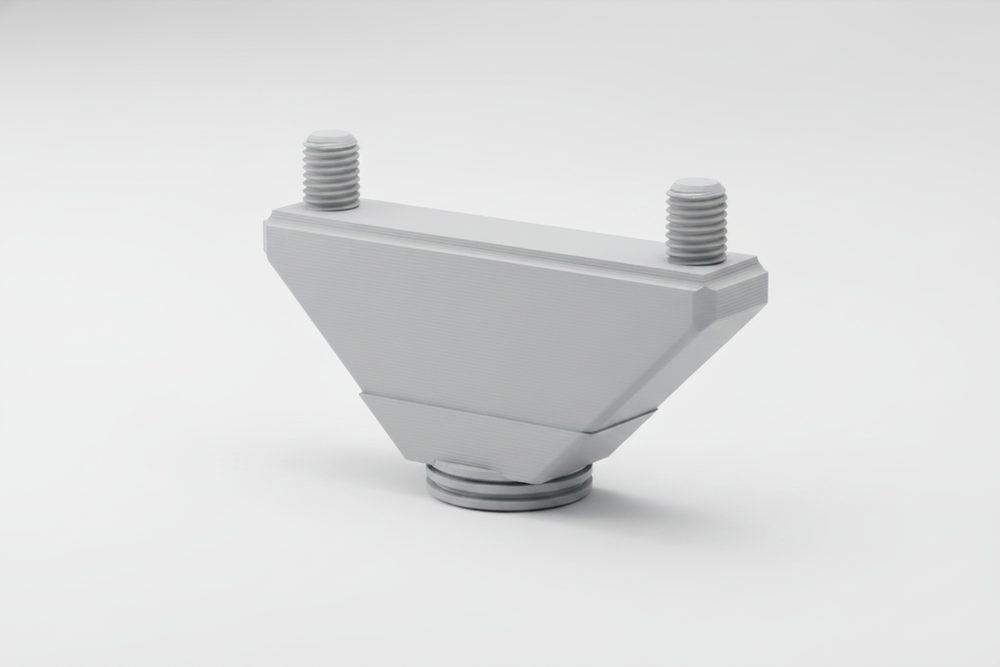
- Twin Head ($7) — one stud becomes two, 70 mm apart, so one stick carries a pair of rods. That spacing suits Standard heads side by side; the Big U Cradle can foul its neighbour at 70 mm, so pair it with Standard heads or angle the two heads clear.
- Camera Adapter ($5) — female 3/8" BSF on the bottom, a hex pocket on top for a real stainless 1/4"-20 hex-head bolt, 20–25 mm (not included). We deliberately don't print the camera thread itself: a printed 1/4"-20 thread in a small boss is exactly what shears when a camera swings on it, so the printed part's only job is to stop a real steel bolt turning. Always run a safety leash through the Ø5 mm hole to the bank stick or a peg — what stands between a knock and your camera in the water.
Material and printing
PETG is recommended across the range — tougher and far more UV- and weather-stable outdoors than PLA, which prints and works but gets brittle in sun and cold (more in the PETG vs PLA guide). Print at 4 perimeters, 30% infill, 0.15–0.2 mm layers for a clean thread. Every part prints thread-opening-down, and almost none need supports: the U Cradle, Camera Adapter, extensions and Twin Head print support-free. Only the Big V Rest's shallower arms want a touch of optional support, and the tall extensions want a brim for bed grip. Nothing here needs an unusual bed size — see our printer guide.
Honest limits
None of this makes a printed rod holder a load-rated product. We give no holding-force figure for any head or adapter, on purpose: a printed part's real-world strength depends on your printer, settings, material and wear, so any number we quoted would be more guess than fact. Every head and adapter here is designed for the standard 3/8" BSF bank stick geometry, built, in our construction, around a printed thread rather than a cut one — a statement about how it's made, not a promise about what it will hold.
Treat every head and adapter as a rest for a rod you're attending, not a clamp trusted unattended, and never as a way to secure anything against theft, current or a running fish. The Camera Adapter is the sharpest case: it carries no load rating, and its steel bolt and leash exist precisely because the printed part alone shouldn't hold a camera over water. Before any of these parts go on sale, we run real fit and load testing on physical prints against actual bank sticks — that shapes the design, but never becomes a load figure on a product page, because your print is not our test print. Inspect parts before every trip, rinse off salt and grit afterwards, and reprint anything cracked or stripped rather than gluing a repair and trusting a rod, or a camera, to it again.
 PETG filament 1.75 mmThe material we design for — tough, water-safe, easy to print.
 Stainless screw assortmentMounting hardware — stainless for anything near water.
Frequently asked
Will a printed 3/8" BSF thread actually hold?
It's built to the standard 3/8" BSF bank stick geometry and printed rather than cut, with a deliberately close internal thread designed to bed onto a steel stud without play. That's a statement about fit, not a load rating — real fit and load testing on physical prints happens before these parts go on sale, but it never turns into a holding-force number, because your printer, settings and material change the result.
Do I need metal inserts in the thread?
No. The thread is printed directly in the part — no heat-set inserts, no post-machining. It's designed to print thread-opening-down so the thread comes out as clean, printable rings, and it beds in against the bank stick's steel stud over the first few times you screw it on and off.
What material should I print these in?
PETG is recommended. It's tougher and far more UV- and weather-stable outdoors than PLA, and it's what gives the Butt Grip's C-clip the spring it needs to hold a rod handle. PLA prints and works, but it gets brittle in sun and cold — not ideal for a part that lives on a riverbank.
Does this fit my bankstick?
If your bank stick, storm pole or rod-pod top uses a 3/8" BSF stud — the standard across the category — yes. That's the one thread every Fishing3D head and adapter is built around.
What is not included?
The Camera Adapter needs a real stainless 1/4"-20 hex-head bolt, 20–25 mm, which is not included — it's what actually carries a camera, with the printed part only stopping the bolt from turning. Hooks, extra hardware and anything load-bearing are handled the same way across the range: printed parts do the shaping, real hardware does the holding.
Every Fishing3D file ships with the guides that match it — print profiles, assembly, sealing, tuning. Ordering opens soon — leave your email for a single heads-up.